
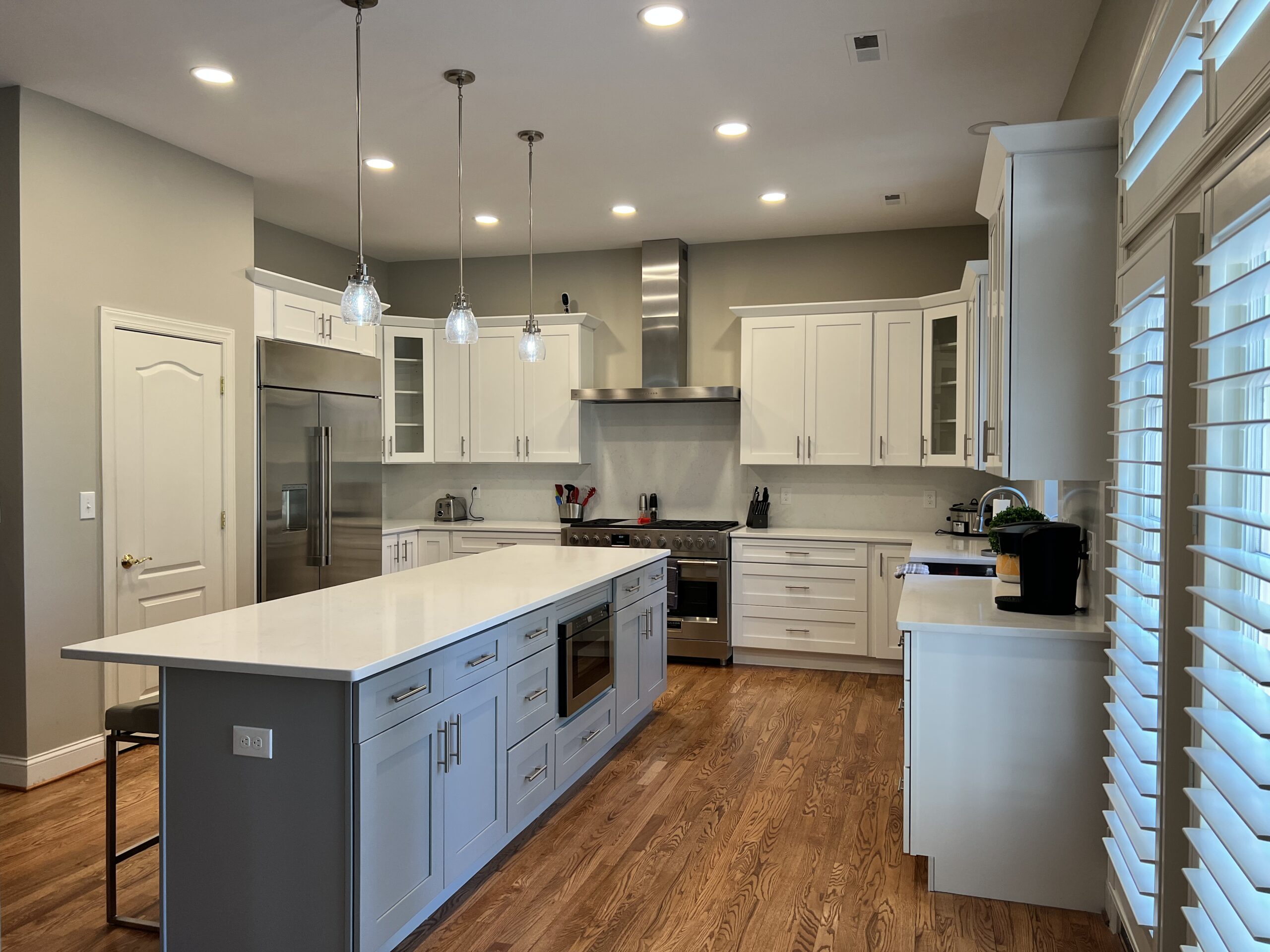
Homes in Downtown Frederick’s Historic District have their special charm. The original brick walls, hardwood floors, detailed trim, and historic architecture give them character. And the nostalgic appearance is hard to find in newer neighborhoods.
But for homeowners, this brings many challenges. If you’re planning kitchen remodeling in Downtown Frederick’s Historic District, you are wondering whether you need approval from the Historic Preservation Commission (HPC). As local contractors, we often get this question. The answer depends on whether the remodeling project affects the outside of the home.
The Historic Preservation Commission reviews exterior work on historic properties. So it doesn’t matter how you update your cabinets or countertops.
But some projects do change the exterior of the house, and this is where the rules apply. Understanding the rules before demolition begins can save you time, money, and stress.
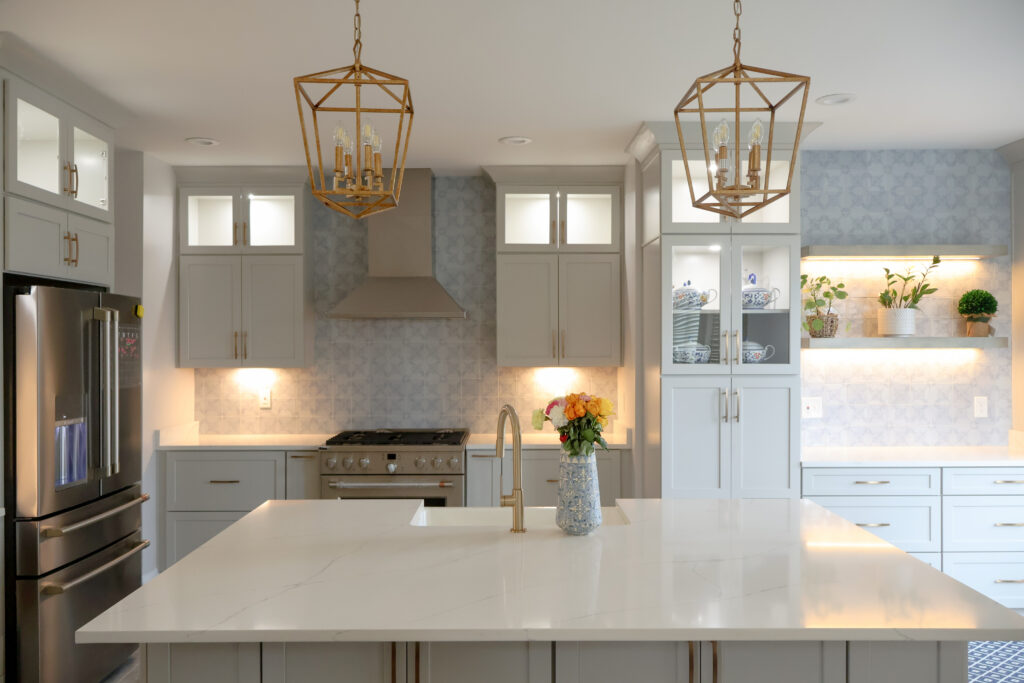
What Is the Historic Preservation Commission?
The Historic Preservation Commission (HPC) protects the historic character of Downtown Frederick. They don’t stop homeowners from remodeling, but review changes that could affect the historic appearance of the buildings.
The process can be complex, but working with a local contractor helps speed things up. When a project requires HPC approvals, you’ll need a Certificate of Approval (COA) before applying for certain building permits.
Smaller exterior projects may qualify for administrative approval by City staff. But minor work may not require approval at all.
From our experience, a new kitchen isn’t usually the issue; it’s the changes that affect the outside of the house.
Kitchen Remodeling in Downtown Frederick’s Historic District That Typically Need HPC Approval
If you’re changing the house exterior with your remodel, this usually requires HPC review. Things like enlarging existing windows, adding new ones, replacing exterior doors, and creating new openings fall in this category.
Enlarging or Adding Windows
Many homeowners want to have more natural light in their kitchen. They come to us wanting to replace a small window with a larger one. Or they want to add a new window above the sink.
These changes alter the exterior, so they require HPC review. The Commission will assess the size, placement, and compatibility of the new opening with the building.
Replacing Exterior Doors
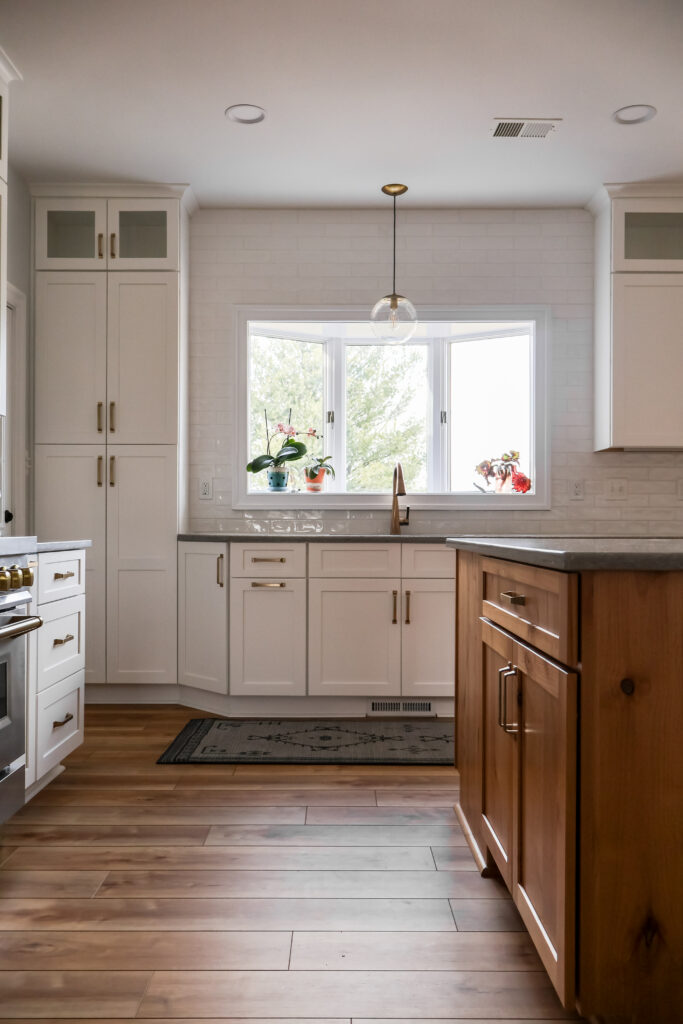
Many homeowners want their kitchen to open up to the backyard. Or they want to replace an old back door with French doors or sliding glass doors. Exterior doors are part of the historic structure and require review. If you’re changing the style, size, or location of the opening, you’ll need HPC approval.
Creating a New Exterior Opening
One of the common requests we get is adding a new door to connect the kitchen to the backyard. Since this changes the exterior of the historic building, HPC approval is required.
Exterior Kitchen Vents and Mechanical Equipment
Modern kitchens need a larger range hood vent. If the vent exits through an exterior wall or the roof and is visible, it requires a review.
But you can ask your contractor for installation options that minimize the visual impact on historic homes.
Rear Additions or Expanding the Kitchen
Historic homes may have small kitchens, so homeowners want to add extra square footage. Extending the back of the house, building a bump-out, or adding a breakfast room requires HPC review. This is to ensure the additions are compatible with the historic property.
For example, one of our clients shared that their kitchen feels too cramped for family gatherings. They wanted to remove the back wall and build a 10-foot rear addition to create an open kitchen with a large island.
This changes the size and appearance of the building from the outside. We handled the HPC approval process before construction began.
We always encourage homeowners to discuss additions early in the design process. This helps avoid delays in construction.
Kitchen Remodeling Projects That Usually Don’t Need HPC Approval
When renovating work stays inside the home and doesn’t change the exterior, it usually doesn’t require Historic Preservation Commission approval.
New Cabinets
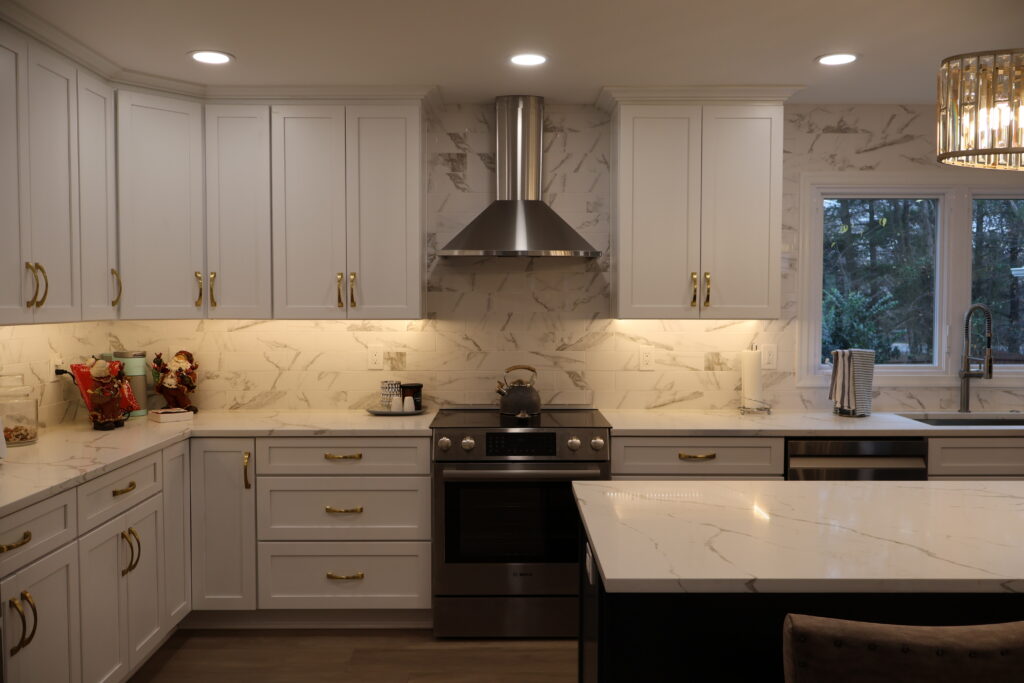
Replacing outdated cabinets with custom cabinetry is one of the most common upgrades we see in kitchen remodeling in Downtown Frederick’s Historic District. You are free to go with painted shaker cabinets or a more modern design, as cabinet replacement isn’t reviewed by the HPC.
Countertops
Countertops are also an interior change, so approval isn’t required. You can go with quartz, granite, butcher block, marble, or your material of choice.
Flooring
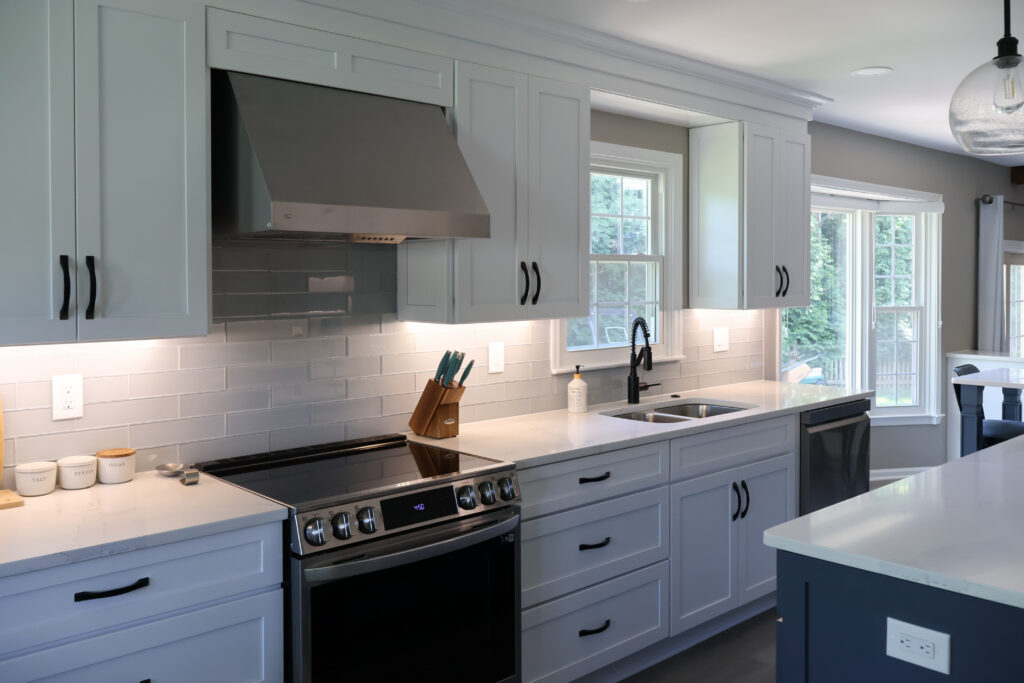
Many homeowners replace the worn vinyl or tile flooring. Flooring choices are generally not reviewed by the HPC because they are inside the home.
Appliances
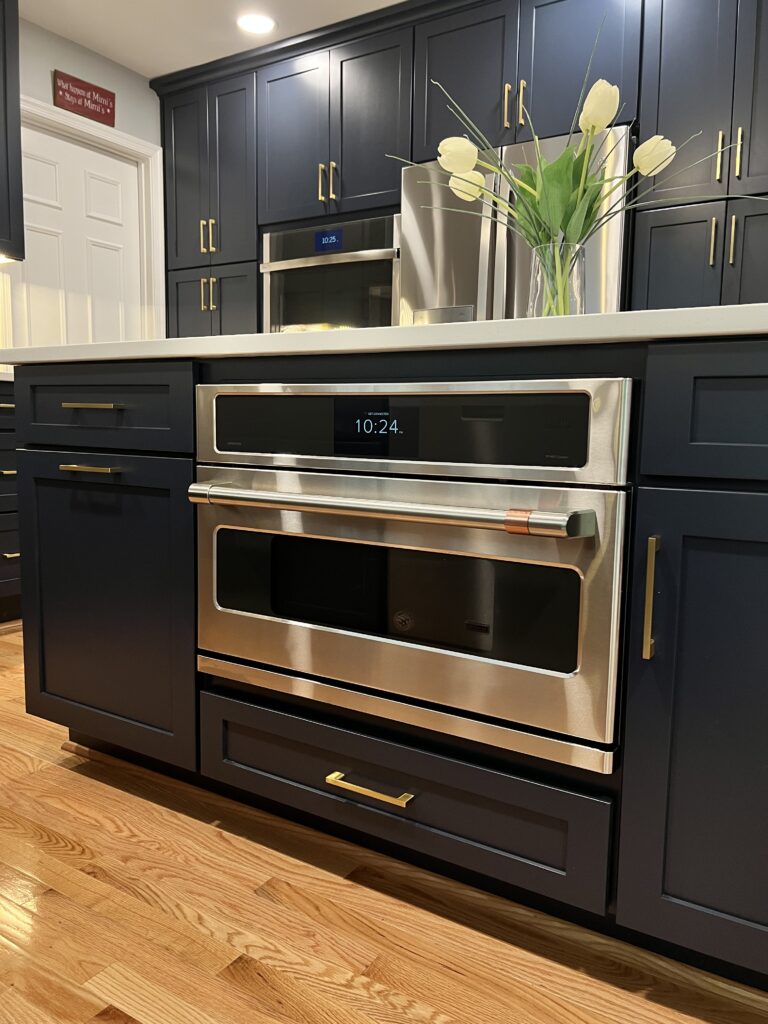
Installing a new refrigerator, dishwasher, oven, cooktop, microwave, or range is considered part of the interior renovation. It is one of the kitchen remodeling in Downtown Frederick’s Historic District upgrades that doesn’t require approval.
Plumbing and Electrical Updates
Older homes in Downtown Frederick need electrical upgrades or plumbing improvements. But these are regulated with building codes rather than the Historic Preservation Commission.
Historic Homes Often Hide Surprises
Another thing we learned from remodeling older homes is that opening walls reveals unexpected issues. When removing the drywall, we often find old plumbing, outdated electrical wiring, uneven framing, and poorly done structural modifications.
Even though this may sound frustrating, finding these issues is actually quite common. We often share this during our initial consultation with clients. Our top recommendation is to leave room in the schedule and budget for unforeseen repairs.
Imagine you’re remodeling a late-1800s rowhome near Market Street in Downtown Frederick. You want to replace cabinets and open up the wall. When demolition begins, you discover layers of old renovations, original brick hidden behind drywall, and outdated electrical wiring that no longer meets current building codes. But your contractor already advised you to allow for some flexibility in your timeline and budget, so this was no surprise.
FAQ
Do all kitchen remodels in Downtown Frederick need HPC approval?
No, you don’t need HPC approval for all the kitchen remodeling in Downtown Frederick’s Historic District. If you replace cabinets, countertops, flooring, appliances, and fixtures, there is no need for approval. It is generally needed when the remodeling project changes the exterior of a home.
Can I replace my kitchen window without approval?
If you’re replacing a window with a different size, style, or location, you will need approval because this changes the building’s exterior. Always make sure to check about replacing historic windows before work begins.
Should I apply for permits before contacting the HPC?
When a project requires HPC approval, you need to get a Certificate of Approval before submitting the permit applications. This helps prevent delays in kitchen remodeling in Downtown Frederick’s Historic District.
Final Thoughts
One of our favorite projects involved a Downtown Frederick home, where the family lived for 20 years. They loved the historic charm and original brick exterior. But the kitchen was too small for their growing family. They were worried that remodeling in the Historic District would mean they would have to give up their dream kitchen.
We added custom cabinetry, improved storage, updated the electrical and plumbing, and added better lighting. This created a brighter and more functional space while keeping the historic character. The most important thing was starting with the approval process early, which prevented last-minute surprises.
If you’re planning kitchen remodeling in Downtown Frederick’s Historic District, work with a contractor with local experience. They understand the historic homes and local approval process, which makes the process smoother.
Contact Build Design Center now and schedule a free consultation.