
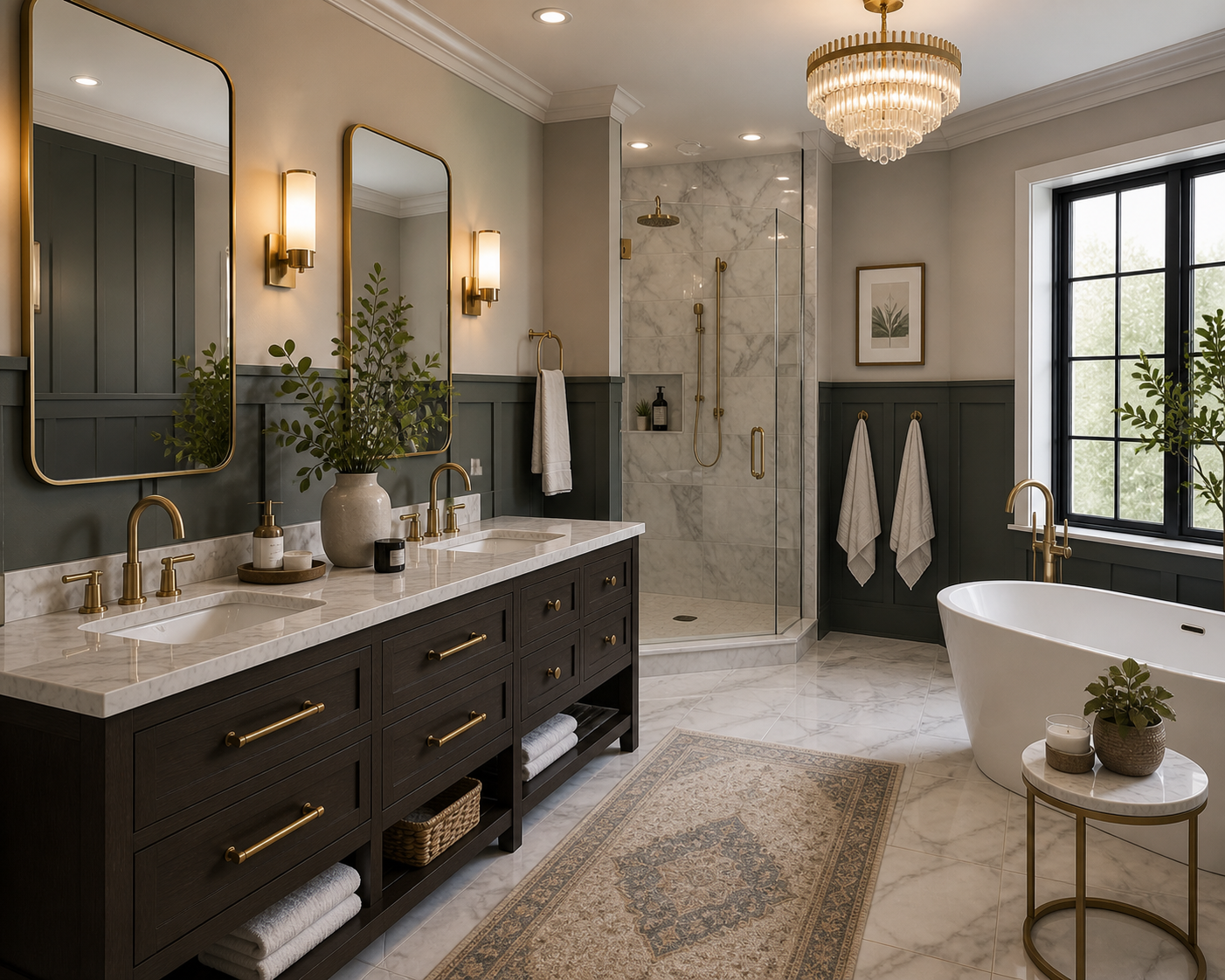
Board and batten in bathrooms is trending among Northern Virginia homes. We talk with homeowners all the time, and the same thing keeps coming up. Their bathrooms feel flat and boring. However, bathrooms in Northern Virginia are usually small and leave little room for decorative touches.

Board and batten is a great way to add character without making the space feel overcrowded. We often recommend it to our clients who want an upgrade that looks simple on paper but makes a lasting impact. The subtle texture adds depth without overpowering the space. We’ve seen it become the final touch in many Northern Virginia remodels.
If this caught your attention, let’s explore more. We share detailed guides on materials, cost, and design options.
Choosing Materials for High-Moisture Areas: PVC vs. Wood vs. MDF
Choosing the right material matters just as much as the design. Splashes, humidity, and poor ventilation can lead to damage.
PVC
PVC trim boards are a good option for the bathroom. They are moisture-resistant, so you won’t have to worry about swelling or rot.
However, they cost more than other options. Plus, you won’t get the same natural feel as wood. But they provide excellent long-term value.
Wood
Wood brings an organic feel with its texture. It can be painted for a custom look.
However, wood needs proper prep to stay in good condition. A primer needs to be applied on all sides. Caulking needs to be properly sealed, and the paint needs to be applied correctly. Otherwise, you’ll see warping over time.
We’ve used primed pine boards with proper sealing in one renovation in Arlington. The board and batten wall makes a wonderful statement without ovrerpowering the room.
MDF
MDF is an affordable material for board and batten. Plus, it is easy to paint if you want an upgrade. But it does not handle moisture well. Basically, it will swell at the bottom, especially near tubs or toilets.
If you still choose it, make sure to seal every edge. Keep it away from direct water exposure to avoid damage.
Design Inspiration: Height and Color
Deciding between a full wall and a ¾ height can be challenging for homeowners. From our experience, both options work fine. It depends on the space and how bold you want to go.

Full Wall Board and Batten
A full-height board and batten runs from the floor to the ceiling of your bathroom. It feels clean and refined. We use this in narrow bathrooms when we want to draw the eye up.
In one townhouse in Sterling, the bathroom was compact and had low natural light. We installed full-height paneling in a warm white and kept the spacing between battens wider. This helped make the space feel visually larger.
Full-height works well when the rest of the bathroom is simple. It becomes the main focal point. But with different textures and decorative elements, it may start feeling busy. Also, it pairs well with modern styles.
3/4 Height Board and Batten
Some prefer to run the board and batten to about 40-60 inches or roughly 3/4 up the wall. This adds texture without overwhelming the space. It’s commonly used in Fairfax and Arlington homes.
The ¾ height board pairs nicely with mirrors, vanities, and tile. It suits traditional and transitional homes.
On top of that, it is forgiving during installation. If there are minor imperfections in the walls, they won’t stand out as much.
In a powder room in Arlington, we used a muted blue and paired it with a crisp white for the space above. It balanced the room and made a standard vanity look more intentional.
Board and batten costs between $1,500 and $3,000 for professional installation in Northern Virginia. A small accent wall typically costs between $1,000 to $2,500. But for a full room, you can expect to pay between $3,000 to $8,000.
The final price depends on the material used, labor, complexity, and prep work. PVC and high-grade pine are more expensive than MDF.

The labor costs can increase the price. In Northern Virginia, the rates are slightly higher than the national average. If you have complex patterns that require more labor, this will increase the cost.
DIY vs. Professional Install
If you decide to do it yourself, the numbers look different. A DIY board and batten project costs between $300 and $800.Materials for a board and batten wall cost $200 to $600. For the paint and supplies, you can pay between $50 to $150.
However, you need to have the right tools. You will need a miter saw, level, and nail gun. Also, the walls should be fairly straight and require minimal prep work. On top of that, you need to have time. And let’s not forget about patience with measuring and spacing.
But when you live in an older home with uneven walls, it may be better to call the pros. Also, bathrooms with tight layouts can be difficult for beginners.
Style Guide for Northern Virginia Homes
Board and batten can fit both traditional and contemporary styles. The final look depends on your finishes, details, and colors.
Traditional homes
For colonials and older townhouses, focus on a classic look. We recommend even spacing, about 12 to 16 inches. Choose white or off-white for a clean look. Stick with simple baseboards and a chair rail cap on top. This keeps the board and batten consistent with the rest of the house.
Contemporary homes
With a few adjustments, board and batten can work for modern bathrooms. We recommend going for full-height panels. Darker colors like navy, gray, and deep green work well if you want a refined feel. Go with matte finish, minimal trim, and clean lines to fit the modern vibe.
Transitional
Transitional is the most common style in NOVA homes. We often go with a ¾ height board and batten with slightly wider spacing. When it comes to colors, neutral tones with subtle colors work best.
What height should board and batten be in a bathroom?
Board and batten is typically installed between 40 and 60 inches. 48 inches is a safe starting point. But if you prefer a modern look, go for 60 inches or full height.
Is it waterproof?
Board and batten isn’t waterproof. It can be moisture-resistant if done right. Contractors usually use PVC or sealed wood and high-quality bathroom paint. They also caulk all seams to prevent water from penetrating the material. But also, good ventilation is very important. Even the best materials won’t hold up well in a damp bathroom.
What are the best colors for small bathrooms?
Light and mid-tone colors work best for a small space. Some great options are warm white, soft gray, sage green, and light blue.
Ready to start your project? Contact Build Design Center for a free consultation.