
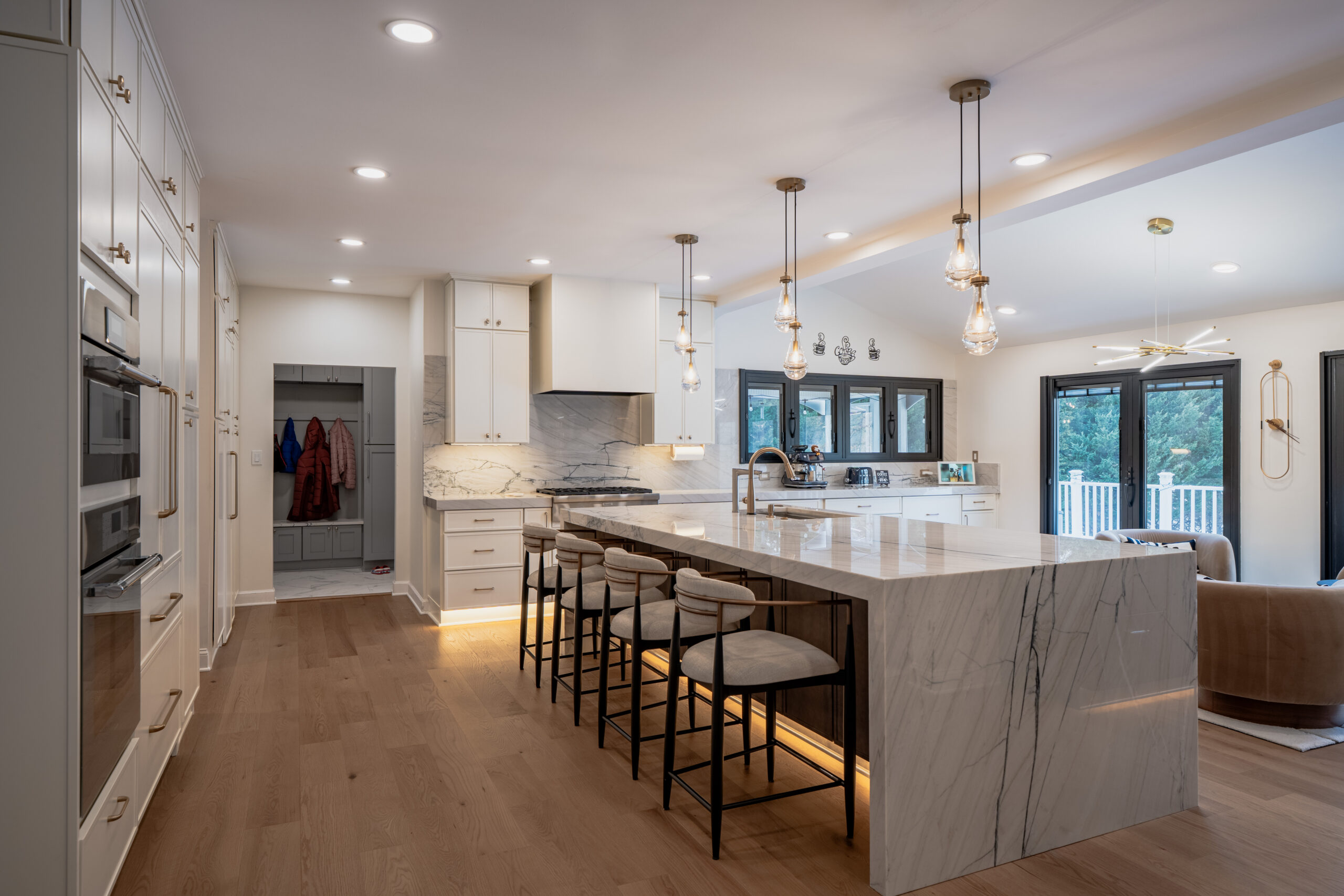
Kitchen remodeling in Washington DC comes with its own challenges. The typical townhouses look so charming but hide some secrets. Small rooms, awkward layouts, and permit requirements are some of the common things homeowners struggle with during remodeling projects.
Knowing that every decision should be practical puts even more stress on homeowners. This guide shares the real constraints and provides smart solutions.
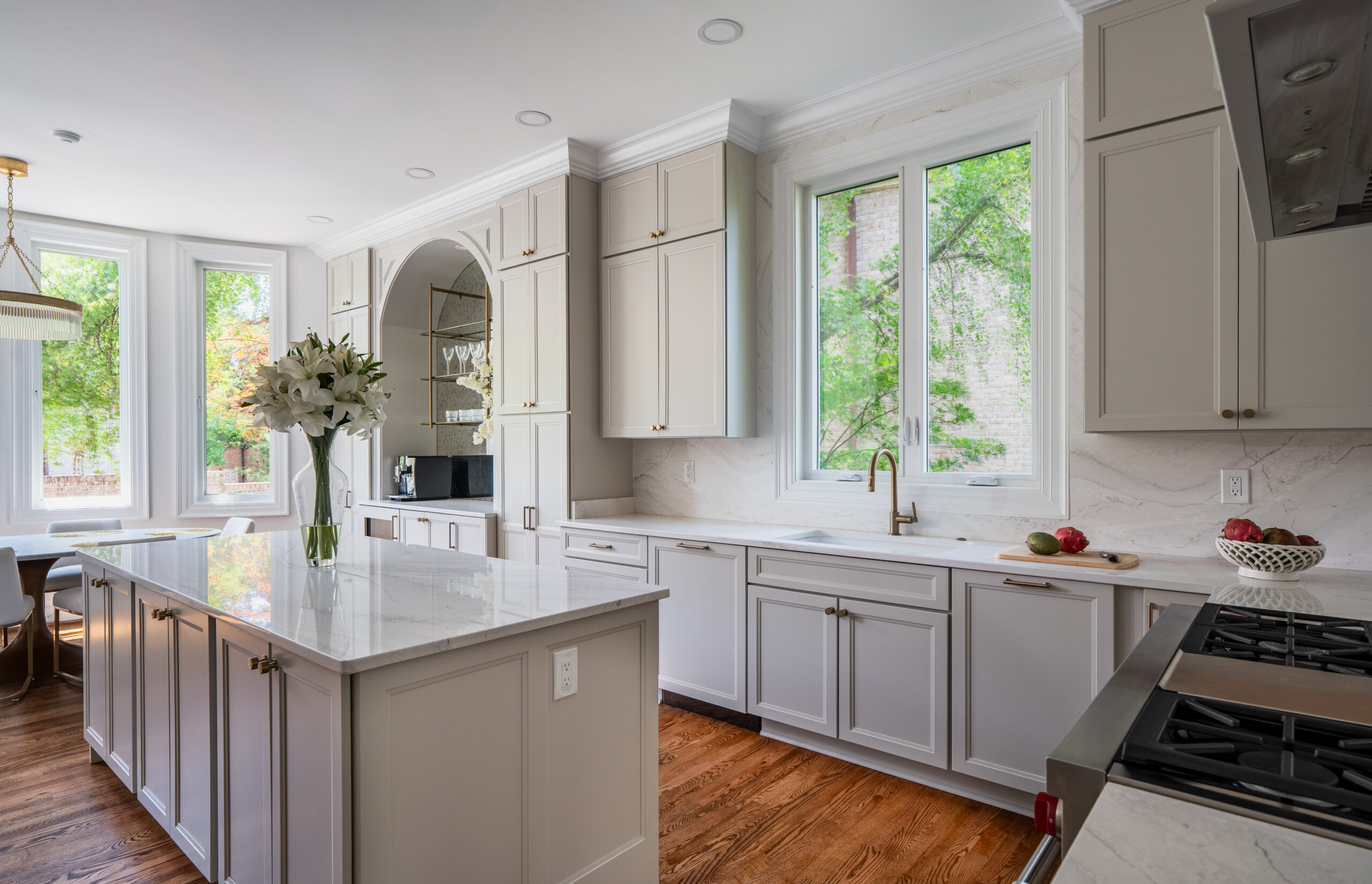
Space Limitations: Kitchen Remodeling Washington, DC
Narrow Row Houses
The row houses, also called townhouses, are the most common housing type. They were built in the late 1800s to early 1900s.
The multi-story homes are long and narrow, limiting design choices. They share side walls with neighboring houses.
In fact, kitchens are often small and located at the back of the house. This makes it more difficult to develop a functional layout.
Older Structures
DC is home to many historic houses. The walls are often load-bearing, so knocking them down requires structural beams. For homeowners, this means that playing with layouts is difficult.
If you’re planning an open-plan kitchen, consult with a structural engineer. Also consider alternatives such as widening a doorway that can achieve a similar effect.
Limited Natural Light
Due to the specific design, townhouses often lack natural light. The side walls are shared with neighbors. The only windows are located at the front and back.
Because of this, homeowners need to be mindful of the design choices. Light colors, reflective surfaces, and under-cabinet lighting are some of the options to consider.
Condo Restrictions
Condo owners in a DC face HOA rules. The plumbing lines and electrical locations may be fixed. As a result, you get less flexibility with layouts.
Simply put, homeowners need to keep the major appliances near the existing plumbing.
Kitchen Layout Ideas Washington DC Homes
Maximizing kitchen space in city homes requires thoughtful planning. The right layout should enhance efficiency and support daily use.
Galley Kitchen
The galley kitchen is one of the most common layouts in DC row houses. It works because it uses two parallel walls efficiently. Everything is within arm’s reach to make meal preparation easier. Plus, the galley kitchen minimizes wasted space.
From our remodeling experience, we recommend placing the sink on one side and the range on the other. This helps balance the workflow. Plus, place the refrigerator at the end to avoid blocking the traffic.
Sometimes, the space can feel cramped due to the cabinetry. In such cases, feel free to remove the upper cabinetry on one side. Replace with open shelving to make the space feel airy.
One-wall Kitchen
The one-wall kitchen is a common solution often found in small apartments and English basements. The idea is to position everything along a single wall. If the space allows, a small island complements the functionality.
To make it work, use tall pantry cabinets to add more storage space. Plus, consider integrated appliances to reduce visual clutter.
L-shaped Kitchen Layout
The L-shaped kitchen is another smart solution for kitchen remodeling in Washington DC. It is ideal if you have a usable corner in the space.
The efficient layout provides excellent traffic flow. Also, many love the open feel. Also, adding a small dining table is possible.
To optimize the layout, place the sink under the window. Keep clear prep space on both sides of the stove.
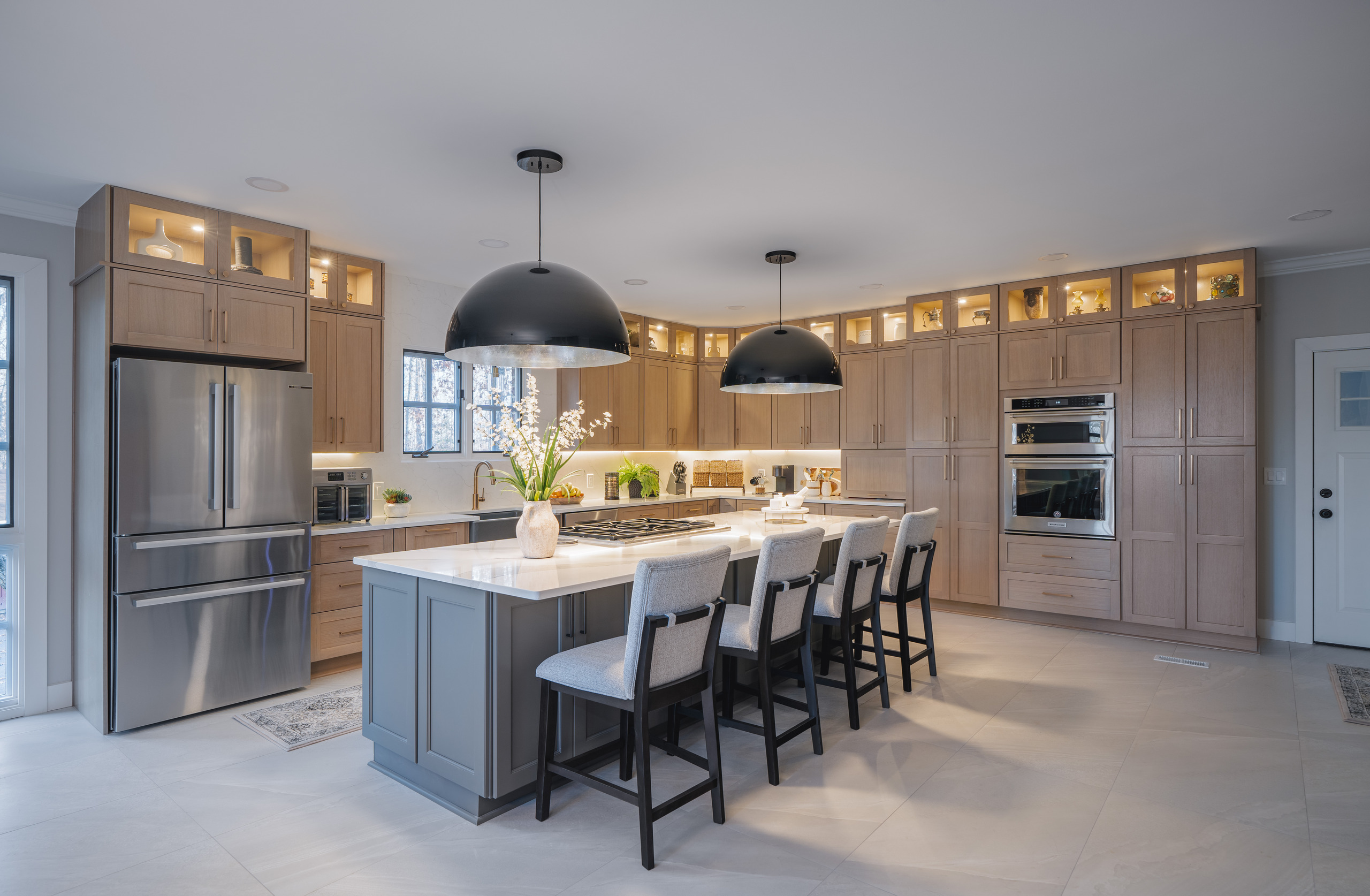
Still ensure the corner cabinet is efficiently used. Take advantage of the Lazy Susan to make everything easily accessible.
Kitchen Peninsula Layout
A classic kitchen island won’t fit in the compact DC kitchens. But if you still need extra prep space, a peninsula is an optimal solution. It provides extra storage space and seating for up to 3 people.
Ensure there is a minimum of 36 inches of clearance space around the peninsula. When the space is tight, skip the seating.
Small Kitchen Island
One of the kitchen layout ideas for Washington DC homes features a small island. A kitchen needs to be at least 12 feet wide to accommodate it. A depth of 24 inches is enough to provide extra workspace but not obstruct traffic flow. Another thing to mind is removing seating or keeping it light.
Kitchen Storage Solutions for Small Spaces
Maximizing kitchen space in city homes requires a thoughtful approach. Use every single inch of the vertical space and provide smart storage options.
Full-height Cabinets
Standard cabinets come with extra unused space at the top. For small kitchens, consider extending the cabinets to the ceiling. This allows extra storage space and a streamlined look. Use this to keep seasonal items or rarely used appliances.
Tall Pantry Cabinets
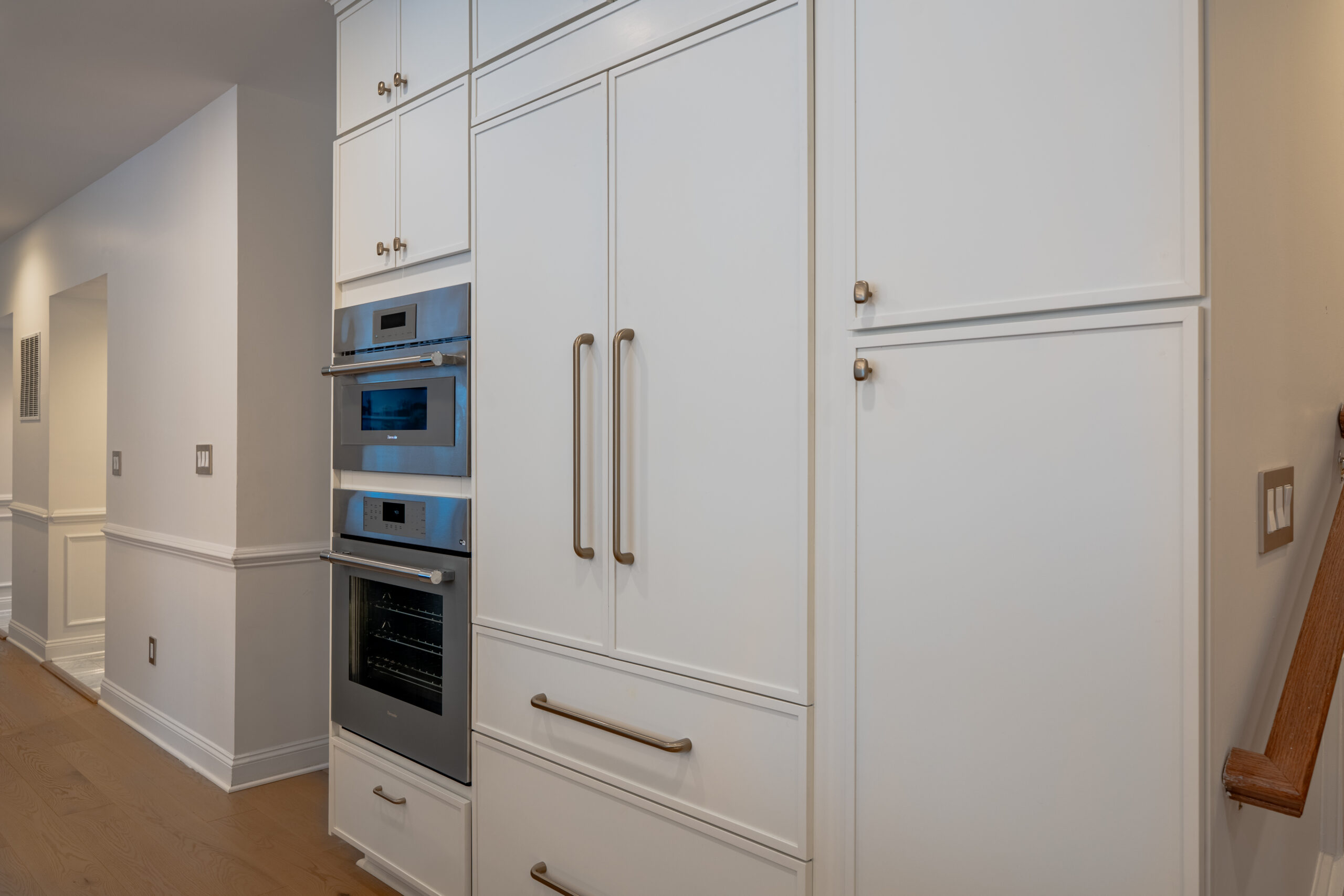
Tall pantry cabinets maximize the use of the space. They keep things organized and reduce clutter. With pull-out shelves, you can easily access everything. You should also consider adjustable shelves if you want to store kitchen appliances.
Deep Drawers
From our experience, deep drawers are better than lower cabinets. They keep items within arm’s reach, saving homeowners from back pain and frustration. The deep drawers are ideal for pots, pans, dishes, and food storage containers.
Corner Storage Solutions
In L-shaped kitchens, the corner provides ample storage space. But only if you use it right. As the space is deep and unreachable, you need smart solutions to keep items easily reachable.
Some of the options are:
- Lazy Susans
- Blind corner pull-outs
- LeMans corner systems
Slim Pull-outs
Awkward gaps don’t have to gather dust. Even a 6-inch gap can be useful for implementing smart storage solutions. Slim pull-outs take advantage of the extra space, providing storage for spices and oils.
Toe-Kick Drawers
The space under the lower cabinets is often unused. No matter how narrow it is, it is ideal for storing baking trays and cutting boards. The shallow toe-kick drawers allow for extra storage space for bulky and flat items.
Design Choices That Make Kitchens Visually Larger
Light Cabinet Colors
Light colors reflect light, making the space look visually larger. That’s why you need to stick with white, cream, light gray, and taupe.
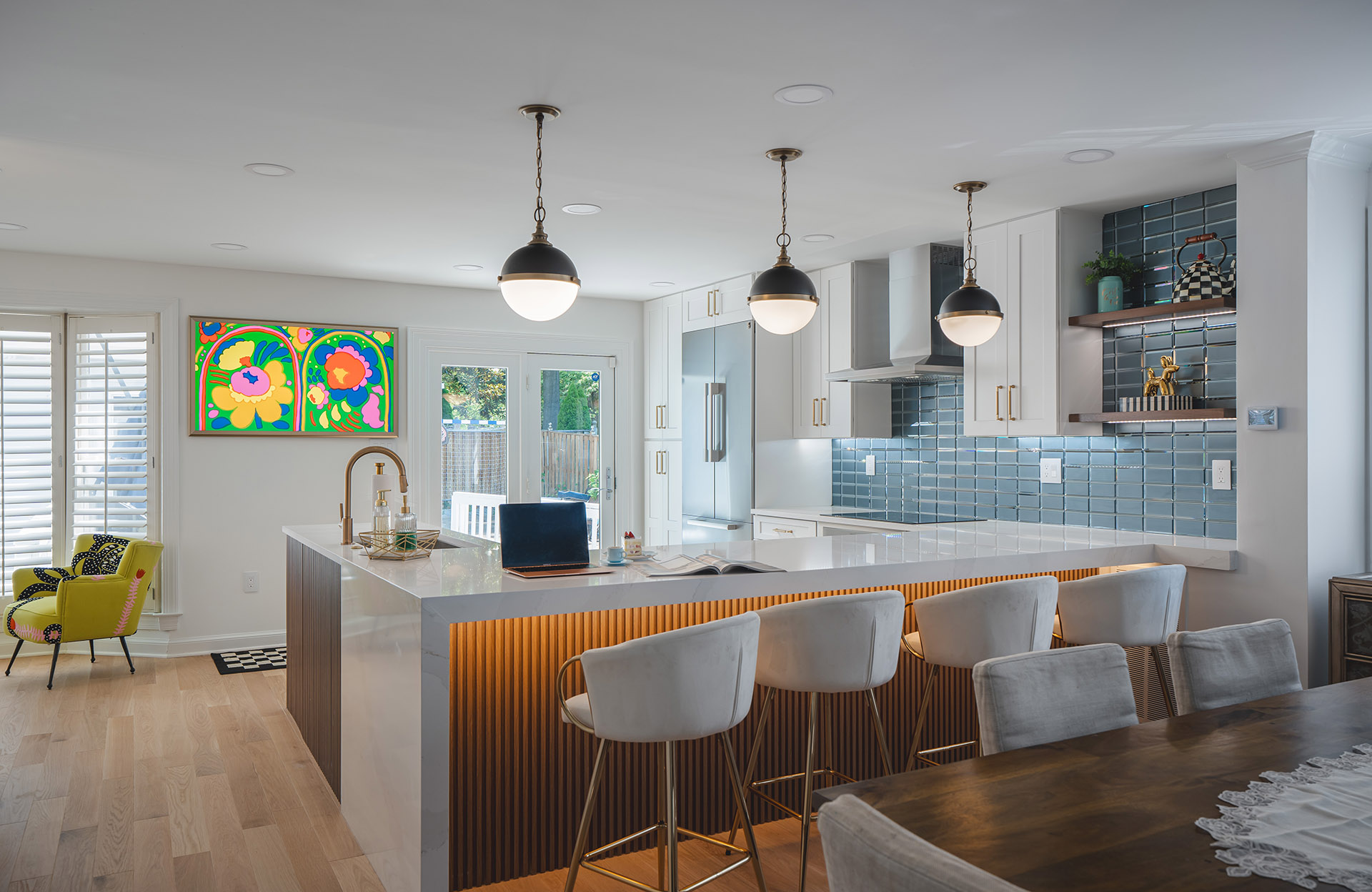
But if you still love bold choices, use them on the lower cabinets only. Plus, make sure to use light colors for flooring and backsplash for an open feel.
Integrated Appliances
Appliances that perfectly fit in your kitchen reduce visual clutter. Refrigerators and dishwashers that blend in with the cabinetry create a clean look.
Slim Hardware
You would want to avoid anything that adds visual weight to the kitchen. Bulky handles are one of them. Go with slim hardware to create a kitchen with clean lines.
Final take
Modern kitchen upgrades in Washington DC help overcome the limitations of small kitchens. Smart organization, vertical storage, and efficient layouts are the winning combination that delivers the best results.
A well-designed kitchen doesn’t have to be large. And our team has local experience to navigate through the challenges. Contact us now, and we will help you enhance functionality in everyday living.
webdesign agentur bamberg https://websiteerstellenlassenbamberg.de/
https://shorturl.fm/CGl7b
https://shorturl.fm/2WsHR
https://shorturl.fm/Llxmu
https://shorturl.fm/v0Cfh
https://shorturl.fm/afhCb
https://shorturl.fm/aHncT
https://shorturl.fm/TyPsA
https://shorturl.fm/OYyEm
https://pesnimp3.net
Oopbuy Spreadsheet is a free shopping-agent spreadsheet and product finder for cross-border shoppers. The oopbuy spreadsheet ? aggregates thousands of curated finds — with photos, prices and working agent links — so buyers can compare items ? across popular Chinese shopping agents
Oopbuy Spreadsheet
https://shorturl.fm/8tRKB
https://shorturl.fm/gkMgT
https://shorturl.fm/mHgnu
https://shorturl.fm/lULwb
The structure and tone of this post work together very well, since the ideas are explained in a way that feels easy to understand while still encouraging readers to think more carefully about the topic being discussed here.
Casinos online cuenta rut
https://shorturl.fm/rY1Cb
https://shorturl.fm/QxeFk
Новинки музыки 2026 скачать бесплатно https://shorturl.fm/tunN9
Последние новинки музыки 2026 скачать бесплатно https://shorturl.fm/l9SWZ
Популярные песни 2026 скачать бесплатно https://shorturl.fm/rHNtJ
HairNeva operates as a prominent Istanbul-based hair restoration clinic focused on FUE, DHI, Sapphire FUE, unshaven hair transplants, beard restoration, and modern regenerative treatments. Directed by European Board-certified plastic surgeon Assoc. Prof. Dr. Guncel Ozturk, the clinic brings together customized treatment plans, AI-powered hair analysis, all-inclusive medical tourism packages, and long-term aftercare. HairNeva focuses on natural outcomes, doctor-led treatments, patient satisfaction, and comprehensive support for international patients.
hair transplant istanbul
Последние новинки музыки 2026 скачать бесплатно https://shorturl.fm/cCQW9
https://shorturl.fm/064Pn
https://shorturl.fm/qXSS5
https://shorturl.fm/EIGJU
https://shorturl.fm/aZSvi
https://shorturl.fm/CMNWC
https://shorturl.fm/3UN6f
https://shorturl.fm/4jO4i
https://shorturl.fm/GLstB
https://shorturl.fm/Hmwqc
https://shorturl.fm/2flLf
При использовании различных онлайн-платформ важно помнить о конфиденциальности данных. Дополнительные материалы представлены на VLESSNET VPN. Грамотный подход к безопасности помогает избежать многих рисков.
https://shorturl.fm/04QXE
Производство упаковки Производство упаковки
Следите за любимыми командами? Проверяйте результаты матчей в любое время.